BETAEarly Access - We're still building! Always verify information with official sources.

5 min read ·Get Your Money Ready

DTI Explained

Key Takeaways

  • DTI (debt-to-income ratio) compares your monthly debts to your monthly income
  • Most lenders want total DTI under 43%, though some allow higher
  • Lowering your DTI can help you qualify for a larger loan—or get better terms

What is DTI?

Debt-to-income ratio (DTI) is the percentage of your gross monthly income that goes toward debt payments. If you earn $5,000/month and pay $1,500 in debts (including your future mortgage), your DTI is 30%. Lenders use this to ensure you can afford your mortgage alongside other obligations.
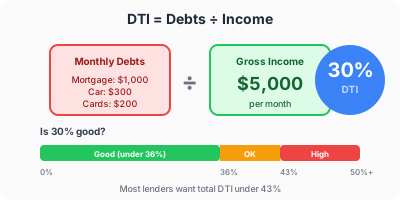
DTI formula: Monthly debts divided by gross income equals DTI percentage

Front-End vs. Back-End DTI

There are actually two DTI ratios. Front-end DTI (or housing ratio) is just your housing costs divided by income—lenders typically want this under 28%. Back-end DTI includes all debts (housing, car, student loans, credit cards) and should generally be under 43%, though FHA may allow up to 50% with strong compensating factors.
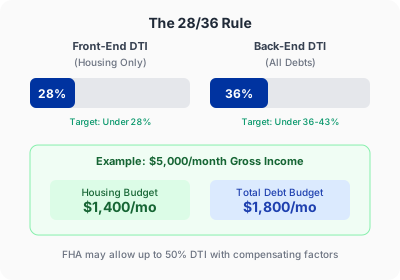
The 28/36 rule showing front-end and back-end DTI targets
The 28/36 rule explained

How to Improve Your DTI

You can lower DTI two ways: reduce debts or increase income. Pay off a car loan or credit card before applying. Pick up extra work or document raises. Avoid taking on new debt. Even small improvements matter—paying off a $200/month car payment drops your DTI and increases the mortgage you can qualify for.

🏠 Kentucky Median Example

With Kentucky's median household income of about $55,000 ($4,583/month gross), a 43% DTI allows roughly $1,970/month for all debts including your mortgage. If you have a $300 car payment and $100 in minimum credit card payments, you'd have about $1,570 available for housing costs.

Your Next Step

Calculate your current DTI: Add up all monthly debt payments, divide by your gross monthly income, and multiply by 100. Know your number before talking to lenders.

Ready to test your knowledge? Take a quick quiz to earn bricks!

Disclaimer: Kentucky Home Journey is an informational resource only. We are not lenders, real estate agents, or financial advisors. Program details, eligibility requirements, and availability change frequently — always verify current information directly with program administrators before making decisions. Contractor listings are aggregated from public sources; we do not endorse, guarantee, or verify their services, credentials, or quality of work. Calculator results are estimates only and should not be considered financial advice. Consult qualified professionals for personalized guidance.

© 2025 Kentucky Home Journey

Not affiliated with Kentucky Housing Corporation or any government agency.